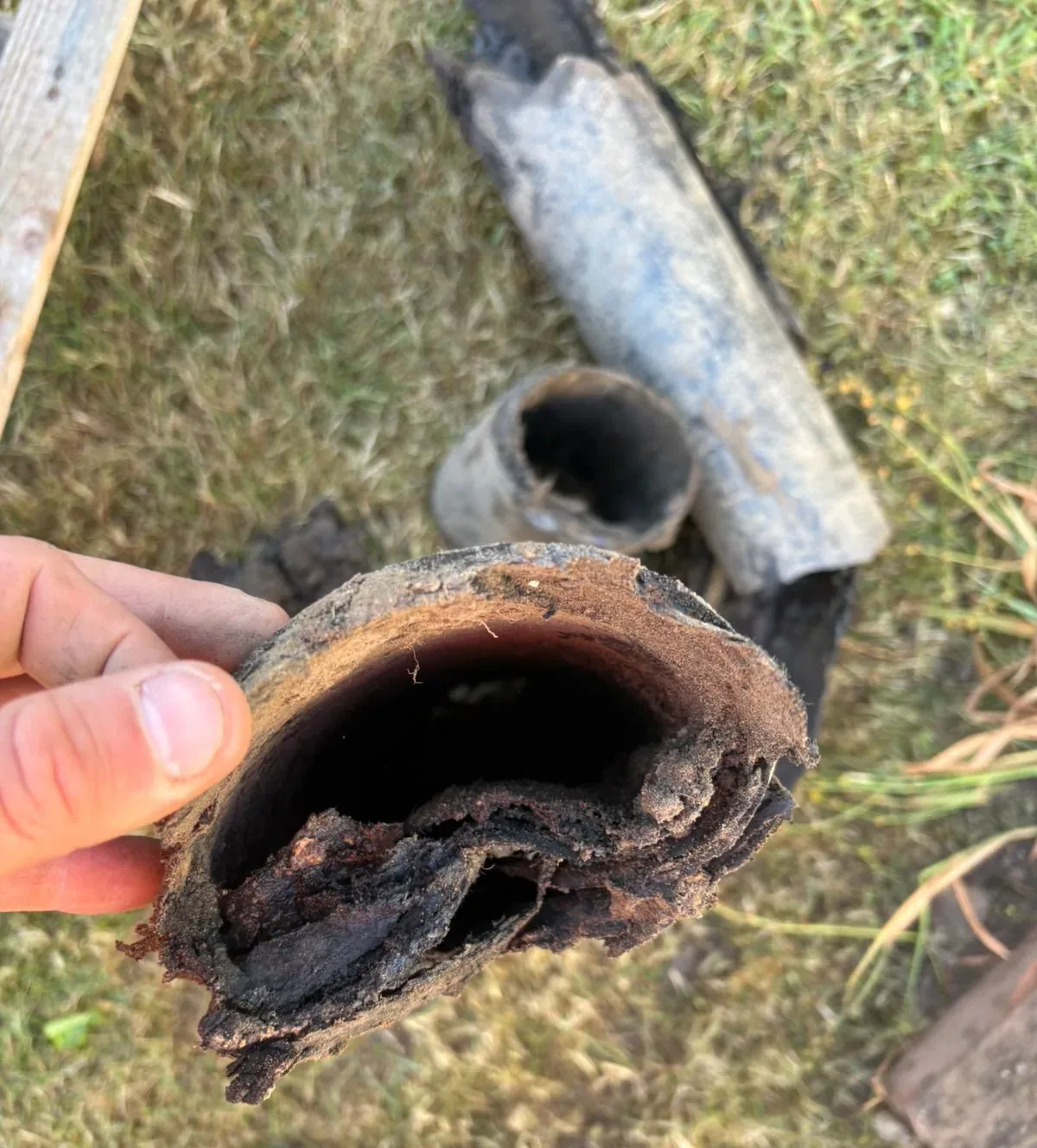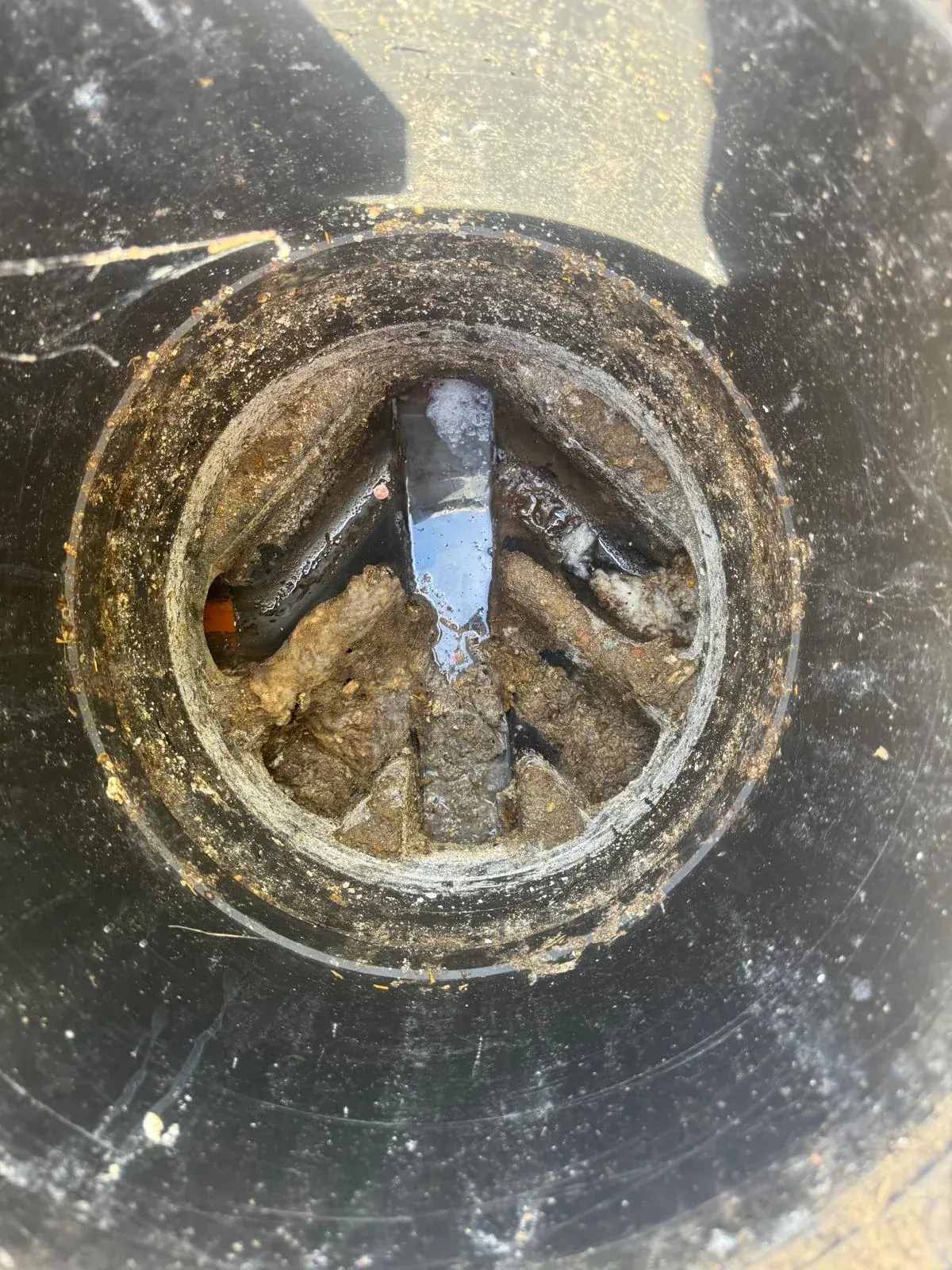
Drains that keep blocking usually have an underlying defect, such as a build-up of debris and scale, open joints catching waste, tree roots or a collapsed pipe. Clearing the blockage helps in the short term, but finding the cause is what stops it returning.
A one-off blockage is annoying. A drain that blocks every few months is telling you something. Here is how we approach it when a customer tells us it has happened again.
Why Clearing Alone Is Not the Fix
Clearing a blockage gets the water moving, and that is usually the first priority. But if the blockage formed because of a problem with the pipe, the same conditions are still there the moment we leave. Waste will catch in the same spot, and the same thing will happen again.
Recurring blockages rarely come down to bad luck.
The Common Causes
- Build-up of debris and scale: Hardened deposits narrow the inside of the pipe, so waste catches more easily. Fats, wipes, hair, food waste, silt and leaf debris all add to it.
- Open or displaced joints: A gap between two lengths of pipe catches waste and causes a back-up.
- Tree roots: Roots push through cracks and open joints looking for moisture, then trap everything that comes down the pipe.
- A dip or the wrong gradient: If a pipe was laid incorrectly, water can stand in it and waste settles instead of moving along.
- Failing pitch fibre: Older pitch fibre drains can deform and lose their round shape, which restricts flow.
- A collapsed pipe: Part of the drain may have failed altogether, leaving very little room for anything to get through.
Same Drain, Same Problem?
Call us on 0330 0435771. You don't need to diagnose it yourself, and there is no call-out charge.
Call UsHow to Find the Cause
The most reliable way is a CCTV drain survey. A specialist camera travels through the system and shows the condition of the pipe directly, so any repair is based on evidence rather than guesswork.
What comes next depends on what the camera finds. Scale can be removed by descaling, roots can be removed, cracks and open joints can often be repaired with structural lining, and a collapsed section may need replacing.
What You Can Do at Home
- Keep fats, oils and grease out of the sink.
- Only flush toilet paper. Wipes marked as flushable can still cause trouble in the pipe.
- Keep gullies clear of leaves and silt.
- Call early if you notice slow drainage or smells, as they are usually the first warning signs.
Frequently Asked Questions
It depends on the property and how the drains are used. Drains that are maintained regularly are usually quicker to clean. If you have had repeat blockages, ask us what we would suggest for your system.
If your drains are cleaned regularly, it can take only 30 minutes. If debris and scale have been left to build up, it may take longer.
No. There is no call-out charge.