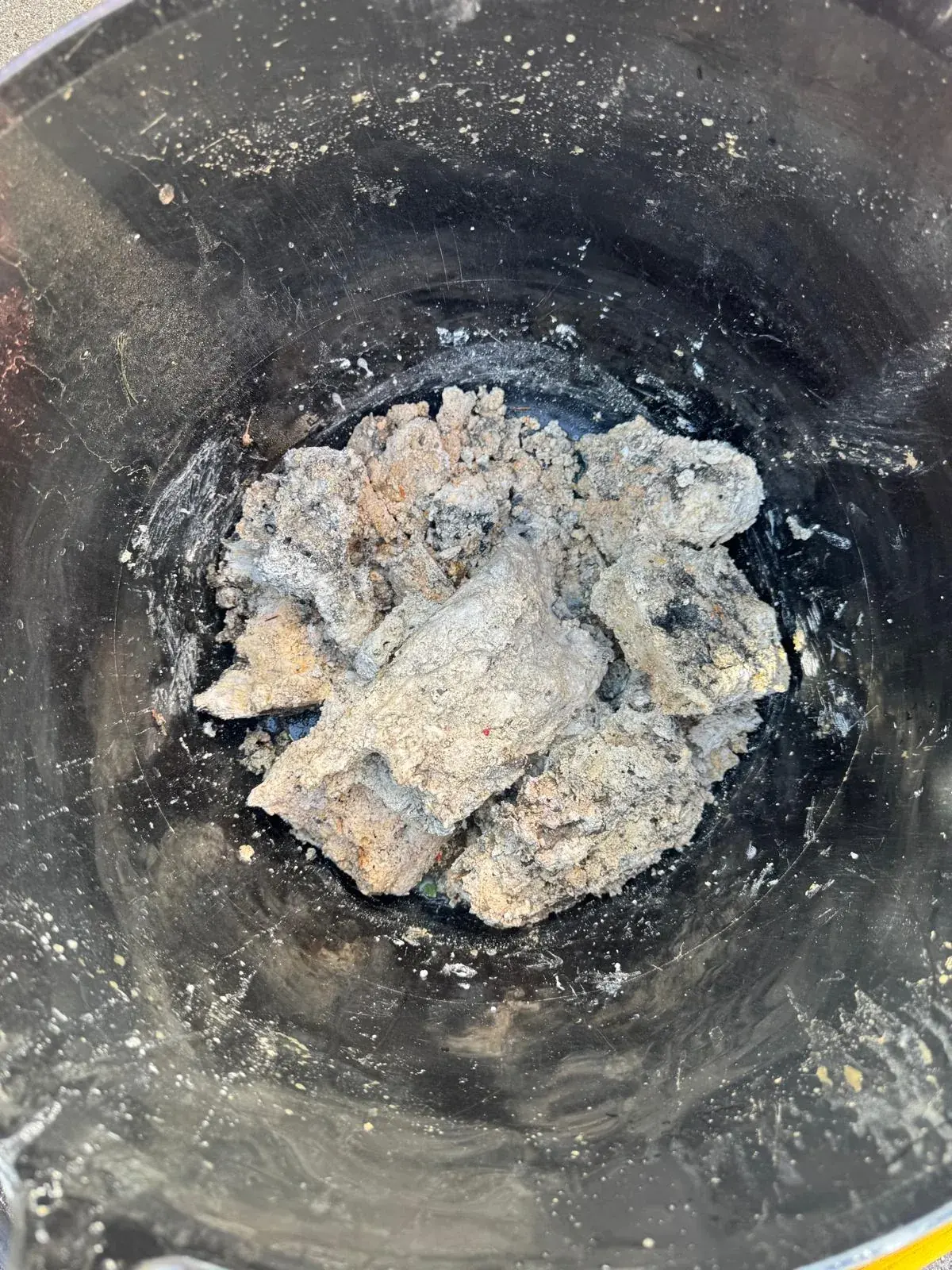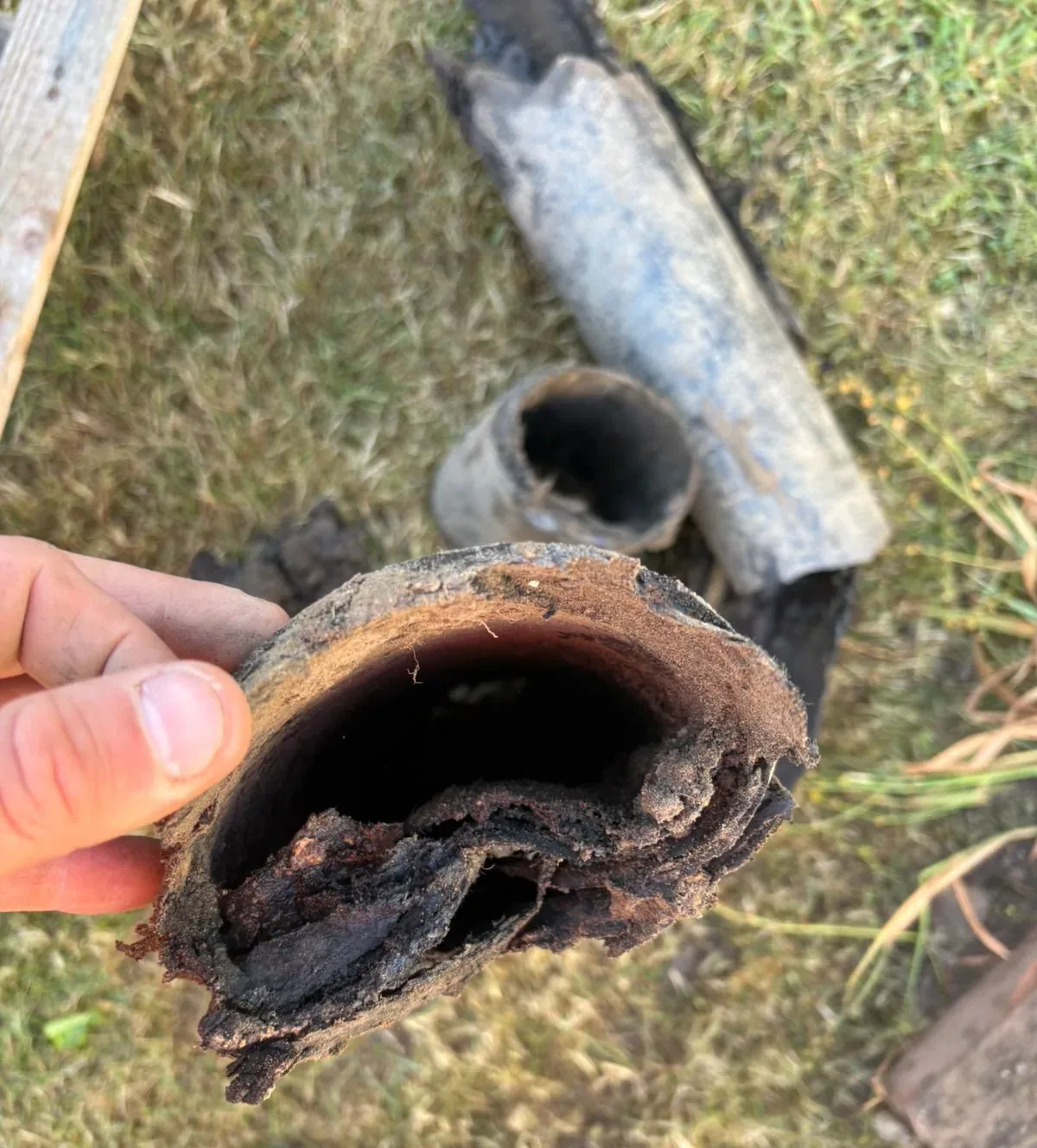
Pitch fibre drains soften, blister and lose their round shape with age, which causes slow drainage and repeat blockages. A failing pitch fibre drain does not always need digging up: where suitable, it can be re-rounded and structurally lined.
If your home was built between the 1950s and 1970s, there is a chance its drains are pitch fibre. Many are still in the ground, and plenty of them are reaching the end of their working life.
What Is Pitch Fibre?
Pitch fibre pipework is an older type of drainage pipe made from compressed wood fibres impregnated with bitumen (tar). It was commonly installed between the 1950s and 1970s, and it has fallen out of use in modern drainage because of its poor long-term durability.
The Signs of Failure
- Repeat blockages: The same drain blocks again soon after being cleared.
- Slow drainage: Water takes longer to clear because the pipe has deformed and narrowed.
- Restricted flow: Waste catches where the pipe has blistered or flattened.
- Back-ups: Water backs up at gullies or toilets because the pipe has deformed so much that very little can get through.
Worried About Your Drains?
A CCTV survey will confirm whether you have pitch fibre and what condition it is in. Call 0330 0435771.
Call UsWhy It Fails
Over time, exposure to moisture, heat and chemicals softens the bitumen-impregnated material. The pipe blisters, deforms and loses its original circular shape. That restricts wastewater flow, causes recurring blockages and can eventually lead to structural collapse.
Your Repair Options
A failing pitch fibre drain does not always need digging up. It depends on how severe the failure is, which is why we start with a CCTV inspection.
- Re-rounding and lining: Where the pipe is still suitable, specialist equipment restores its round shape, and then a CIPP structural liner forms a strong, smooth new pipe inside it. We provide a 10-year guarantee on our structural lining.
- Excavation and replacement: Completely collapsed or severely displaced sections may need replacing before any lining can be done.
Avoiding excavation matters most where drains run beneath driveways, landscaped gardens or buildings, because digging there is disruptive and expensive.
Frequently Asked Questions
No. Where the existing pipework remains suitable, specialist re-rounding and CIPP structural lining can restore its shape and structural integrity without extensive excavation.
It typically ranges from £500 to £10,000, depending on the length of the affected run and how badly it has deformed.
In most lining jobs, no. CIPP structural lining can usually be installed through existing manholes and drainage access points.